January and February reveal a different side of Fuengirola. The beaches are quieter, the pace is more relaxed, and the mild temperatures mean you can still spend plenty of time outdoors.
For visitors from the UK, Ireland or northern Europe, the contrast is especially appealing. Average daytime highs are around 17°C in January and 18°C in February. Alongside the occasional rainy day and chilly morning, there are plenty of sunny days for walking, relaxing on a terrace or even swapping your coat for short sleeves around midday.
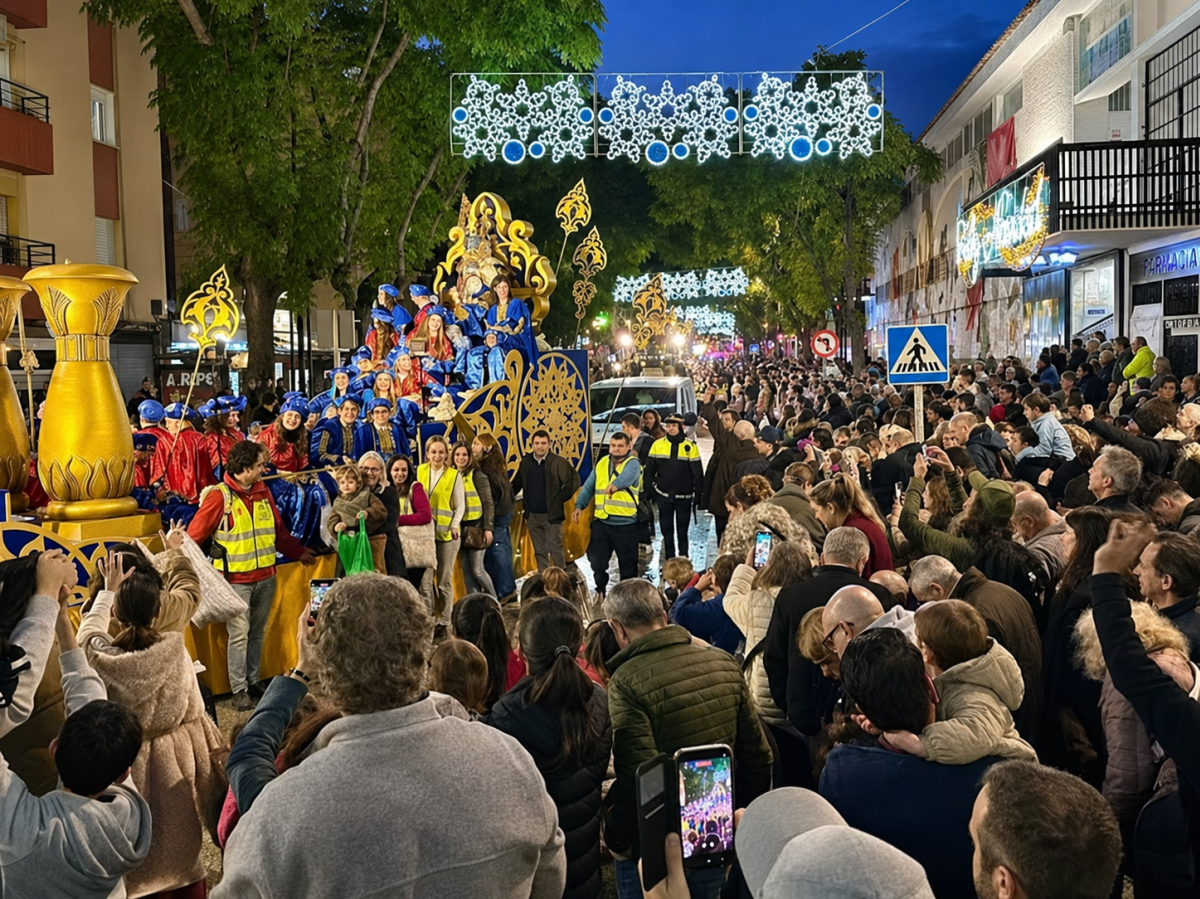
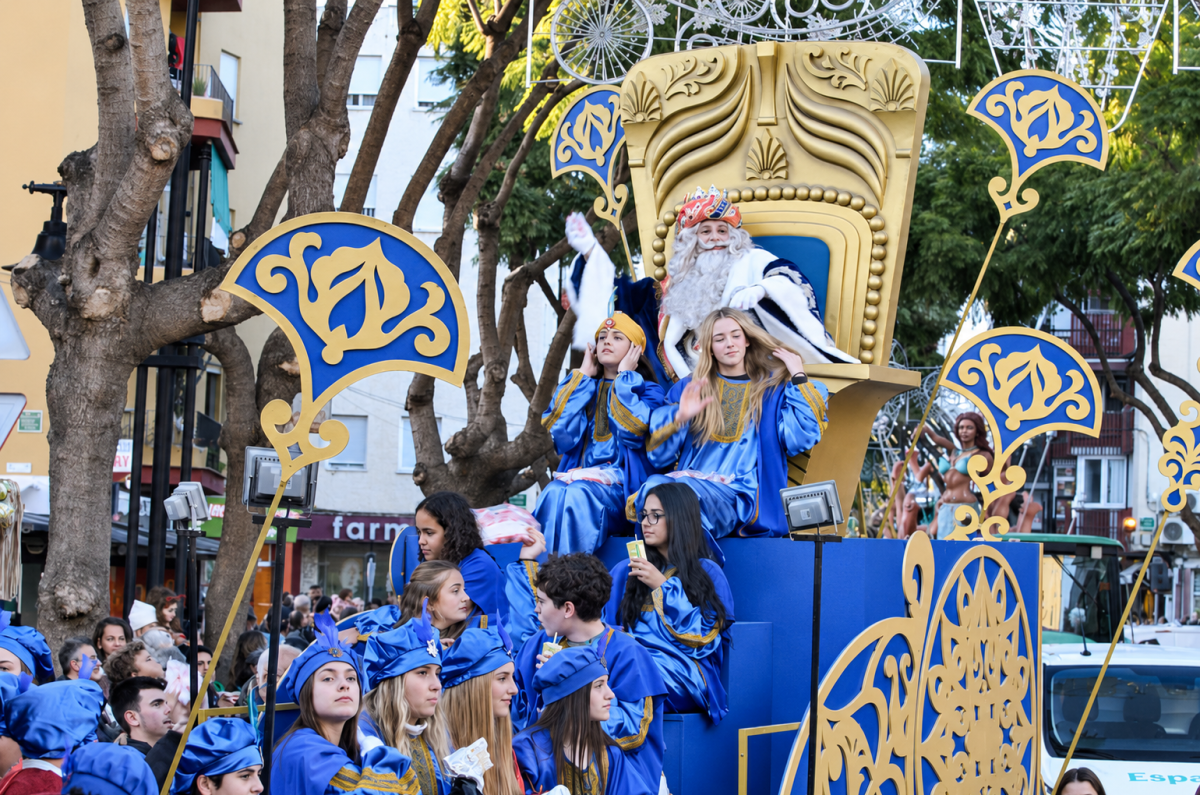
January still has a surprise in store: the Reyes Magos
In Spain, Christmas doesn’t end on New Year’s Day. Much like Father Christmas or Santa Claus elsewhere, the Reyes Magos traditionally bring children presents, recalling the three wise men who, according to Christian tradition, brought gifts to the baby Jesus.
The Three Kings Parade takes place on the evening of 5 January, while 6 January is a public holiday. It’s also the perfect time to try roscón de Reyes, the traditional ring-shaped sweet bread that is a favourite during the Spanish Christmas season.
Enjoy the seafront, even in winter
You don’t need to go swimming to enjoy the Mediterranean. With seven kilometres of coastline, Fuengirola’s seafront promenade is one of the best places to walk, run, cycle or simply pause and unwind by the sea.
Explore Los Boliches, head towards the marina or continue to Sohail Castle. Along the way, find a bench for a rest or settle into a restaurant for lunch in the sunshine.
Play golf in the heart of the season
For many visitors, winter on the Costa del Sol also means golf. Fuengirola has no golf courses within its municipal boundaries, but neighbouring Mijas is one of southern Europe’s leading golf destinations. It has 12 courses, and the winter months are among the busiest of the golfing season.
This makes it easy to combine a morning on the course with an afternoon by the sea, a leisurely meal or a stroll around Fuengirola. With its wide choice of hotels and services, the town makes an ideal base for a golf break with plenty to enjoy beyond the fairways.

Markets and local life
January and February are also a great time to discover everyday life in Fuengirola.
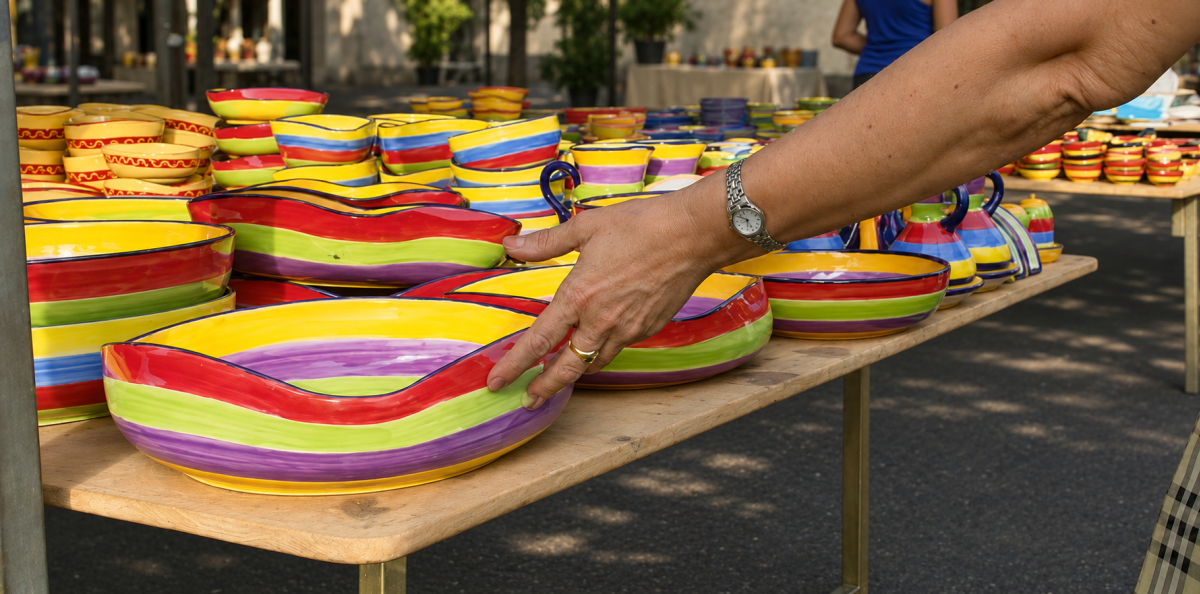
As it does throughout the year, the Recinto Ferial hosts one of Andalusia’s largest street markets every Tuesday, with more than 470 stalls. On Saturdays, the same site welcomes a flea market selling antiques, second-hand goods, crafts and more. There’s also a Sunday market in Santa Amalia, in the southern part of Fuengirola, just a short distance from the Mediterranean.
Discover the town’s heritage on cooler days
Winter is a good time to explore Fuengirola’s history. Walk up to Sohail Castle, explore the area around Parque Fluvial or visit Finca del Secretario, where important remains of the ancient Roman town of Suel have been preserved.
And if the weather doesn’t cooperate, the cultural calendar continues throughout January and February, with theatre, music, exhibitions and activities at venues including the Casa de la Cultura, Museo de la Ciudad and Palacio de la Paz.
February may bring Carnival
Carnival doesn’t have a fixed date. Its timing is linked to Lent and Easter, which falls on a different date each year according to the lunar calendar. Celebrations can therefore take place from early February through to the first days of March in some years.
Costumes, music and street activities offer another chance to join in with local celebrations. Check the official programme each year to see what’s on.
28 February: discover Andalusia Day
If you’re staying until the end of February, keep 28 February in mind. Andalusia Day is a public holiday across the region and a particularly good opportunity to learn more about the culture of southern Spain.
Fuengirola traditionally marks the occasion with public ceremonies, music and community activities, including the raising of the Andalusian flag, concerts by the Municipal Band, verdiales — a traditional form of folk music and dance from Málaga — and family activities. It’s a chance to discover Andalusian traditions and get a better understanding of the regional identity that shapes everyday life in the town.